Thursday, June 25, 2009

Berry Fool

Strawberry Fool Recipe
Tangy berries and luscious whipped cream make a simple yet elegant classic English dessert in a snap. Fold fresh berries -- either lightly mashed or fully pureed -- into a good quality whipped cream for a light, fluffy dessert that will wow your guests (and leave them disbelieving the dessert’s simplicity). The liqueur is optional, but note that orange liqueur adds a lovely sweet citrus note and berry liqueurs deepen the rich, berry flavor of the fool.

Prep Time: 15 minutes

Ingredients:

  • 4 cups strawberries or 3 cups blackberries, blueberries, or raspberries
  • 1/2 cup sugar
  • 1 Tbsp. orange or berry liqueur (optional)
  • 1 tsp. lemon juice
  • 1 1/2 cups heavy cream

Preparation:

  1. Gently rinse berries. Hull strawberries if using. Set aside a few berries for garnish, if you like.
  2. In a medium bowl gently toss berries with sugar, liqueur, and lemon juice. Let sit for 20 min.
  3. Put berry mixture in a blender or food processor and whirl until smooth or simply use a large fork to mash them a bit. Set aside.
  4. In a large bowl beat cream until soft peaks form. Gently fold berry mixture into cream until evenly distributed. Spoon into serving dishes (wine glasses work well), top with reserved berries for garnish, if you like, and serve immediately or keep chilled up to 1 hour.

Makes 6 servings Berry Fool.

Watch video tutorial HERE.

recipe source & image source and fun facts

Frozen Banana Yum

Banana Pops

Chocolatebanana Main

Ingredients and Materials:

3 bananas not overly ripe
5oz semi-sweet chocolate
5oz white chocolate
3tsp shortening
Rainbow sprinkles
Chocolate sprinkles
6 popsicle sticks
Parchment paper
Measuring spoons
2 small bowls
2 spoons
Cutting board

Recipe makes 6 chocolate banana pops.

Directions:

Chocolatebanana Step1

Step 1: Peel the bananas and cut each in half. Push a popsicle stick part way through the cut end of the banana so it looks like a popsicle. Set the popsicles on a cutting board or plastic plate, and place them in the freezer while you prepare the remaining ingredients. Having the bananas cold will help the chocolate harden faster.

Chocolatebanana Step2

Step 2: Lay a sheet of parchment paper on the counter. Set out sprinkles. Put semi-sweet chocolate and 1½tsp of shortening in a bowl. Microwave the chocolate at 100% power for 30 seconds. Stir and repeat. Repeat a third time, if necessary, until the chocolate is completely melted. Repeat the process with the white chocolate.

Chocolatebanana Step3

Step 3: Take 1 banana out of the freezer at a time. Place it on the parchment paper and pour your chocolate of choice over the top. Turn the banana to coat all sides.

Chocolatebanana Step4

Step 4: Decorate the banana with the desired sprinkles. Hold it for about a minute so the chocolate can set, then replace it in the freezer.

Chocolatebanana Step5

Step 5: Scrape extra chocolate off of the parchment paper and add it back to the respective bowl. Re-melt it in a microwave for 30 seconds if the chocolate becomes too thick to pour. Repeat the coating and decorating process with the remaining bananas.

Chocolatebanana Main

After all the bananas have been covered in chocolate and decorated, keep them in the freezer for 45–60 minutes. Enjoy!

Recipe Source

Monday, June 22, 2009

Muddy Buddies

Or, use what ever cereal and name it what you want.
I used honey nut Cheerios and called it Puppy Chow.


9 cups Rice Chex cereal
1 cup semisweet chocolate chips
1/2 cup peanut butter

1/4 cup butter or margarine

1 tsp vanilla
1 1/2 cups powdered sugar


1. In large bowl, measure cereal and set aside.

2. Microwave chocolate chips, peanut butter and butter for 1 minute. Stir and cok for 30 seconds more. Stir in vanilla and pour over cereal. Stir until well coated. Pour in 2 gallon resealable bag.

3. Add powdered sugar, seal and shake. Once well coated, spread on waxed paper (I just used a non-stick pan.) Store in an air tight container.

Recipe credit

Veggies and Grains

No ingredients necessary.
Just load on the veggies, season and enjoy.


Friday, June 12, 2009

Magic Layer Bars

1 1/2 cups graham cracker crumbs
1/2 cup (1 stick) butter or margarine, melted
1 (14-ounce) can Sweetened Condensed Milk
2 cups (12 ounces) semi-sweet chocolate chips
1 1/3 cups flaked coconut
1 cup chopped nuts

Preheat oven to 350°F (325°F for glass dish). In small bowl, combine graham cracker crumbs and butter; mix well. Press crumb mixture firmly on bottom of 13X9-inch baking pan. Pour condensed milk evenly over crumb mixture. Layer evenly with remaining ingredients; press down firmly with fork. Optional Additions: m&m's, craisins, butterscotch chips or peanut butter chips

Bake 30 minutes or until lightly browned. Cool completely. Cut into bars or diamonds. Store leftovers covered at room temperature. I like to cut them into large rectangles,wrap in plastic and keep in the cheese drawer of my fridge for handy individual to-go treats. Stack them high and tie with ribbon for the giving.

Recipe from my favorite blog: m.writes

Tuesday, June 9, 2009

Double Chocolate Oatmeal Cookies

1/2 c. sugar
1 c. butter
1/4 c. water
1 tsp. vanilla
1 egg
3 c. quick oatmeal
1 1/4 c. all purpose flour
1/3 c. cocoa
1/2 tsp. baking soda
1/2 tsp. salt
1 pkg. (6 oz.) semi sweet chocolate chips
1 Tbs. cinnamon

Mix first 5 ingredients. Stir in remaining ingredients. Drop dough by rounded teaspoonfuls about 2 inches apart onto ungreased cookie sheet. Bake in 350 degree oven until almost no indentation remains when touched 10 to 12 minutes. Immediately remove from cookie sheet. Makes 5 1/2 dozen.


Recipe Source

Monday, June 8, 2009

5 minute ice cream

5-minute Ice Cream

WARNING: The Following Instructable Is Extremely Addictive.
Not for the Faint of Heart.

You are now always only 5 minutes away from Ice Cream.
Are you prepared?
* Also works great with yogurt!

rasp.jpg

step 1.Ingredients
1 package frozen fruit (I used raspberries)
1/2 cup sugar
2/3 cup heavy cream
1 tsp vanilla

ingredients.jpg

step 2.
Make Ice Cream
Combine the frozen berries, sugar, cream and vanilla
in a food processor or blender.

Process until the fruit is roughly chopped and
mixture resembles ice cream.


mixing.jpg

step 3.
Eat!

Your ice cream is ready to enjoy!

Eat now if you can't wait, or freeze for firmer texture.
Should there be any leftovers (ha!), they can be frozen for up to a week.
I can't wait to try this with chocolate syrup incorporated!


Sunday, June 7, 2009

Toffee is the bestee

Brown Sugar Toffee Bars


1 cup unsalted butter, at room temperature
1 cup firmly packed dark brown sugar
1 ½ cups all-purpose flour
½ cup rice flour
¼ tsp salt
½ tsp almond extract
12 ounces semisweet chocolate chips
6 ounces almonds, finely chopped


Preheat oven to 325°F.

Spray baking spray in a 9-x-13-inch pan.
Using a standing electric mixer, beat 1 cup butter in large bowl until light and fluffy, about 3 minutes.
Add brown sugar and beat on medium high until fully incorporated.
Add in almond extract and beat for 30 seconds on medium-high.
Turn mixer to low speed and mix in flours and salt. Press dough into prepared pan, it will be thin, you want it to be.
Bake until shortbread is brown, firm at edges and slightly soft in center, about 30 minutes.
Take shortbread out of oven. Sprinkle chocolate chips evenly over the shortbread. Place back in oven for 3 minutes.
Remove from oven and using a spatula, spread the chocolate out evenly over the shortbread. Sprinkle the almond pieces on top of the chocolate.
Let cool. Place in freezer for 10 minutes (helps with the cutting). Cut into 1-ounce rectangles.

Recipe seen here.

Morning Sugar Rolls

MORNING BUNS RECIPE
The recipe for croissant dough can be found in the Tartine cookbook.
Yields: approximately 12 buns


2 pounds croissant dough
1/2 cup brown sugar
1/2 cup white sugar
Finely grated zest of 2 medium oranges
2 tablespoons ground cinnamon
pinch salt
4 ounces (1 stick) butter, melted
extra white sugar for coating muffin cups and for rolling finished buns


1. In a small bowl, combine brown sugar, 1/2 cup white sugar, orange zest, cinnamon and salt. Mixture will keep in the refrigerator for 2 weeks or in the freezer for a month.

2. Prepare a 12-muffin capacity muffin tin by generously brushing bottom and sides of each cup with melted butter. Put a teaspoon of sugar in each muffin cup and swirl around to evenly coat. Tap out excess sugar.

3. Roll out croissant dough into a 1/4-inch thick, 6-inch-by-18-inch rectangle, with the long side in front of you. Brush dough with melted butter, and sprinkle sugar mixture evenly over the whole rectangle—the sugar layer should be about 1/8-inch thick. You may have some of the mixture left over.

4. Starting with the long side of the dough, roll rectangle into a cylinder. Cut cylinder into 1 1/2-inch discs. Fit each disc into the buttered and sugared muffin tins so that the swirl pattern is visible on top. You may have some extra rolled bun dough left over or just choose to bake fewer buns (if you do, cut them all and freeze individually on a pan). Once frozen, place in a resealable plastic bag and store in freezer.

To bake buns that are frozen: Prepare pan as above, let buns defrost in the prepared cups (this will depend on how warm your kitchen is, about 45 minutes), then continue with step 5.

5. Preheat oven to 375 degrees. Let rolls rise in a warm but not hot place for approximately 45 minutes. The rising time will vary depending on how cold your dough was to start and how warm a place they are put to rise. They should rise approximately to 1 1/2 times their original size. Place the muffin tin on a cookie sheet covered with parchment or foil to catch any drips while baking.

6. Bake for about 45 minutes to an hour or longer, depending on your oven. When done, the tops should be well browned and the sugar melted. Remove pan from oven and immediately turn buns out onto a clean baking sheet or work surface. Place pan in sink and cover with hot water (it will be easier to clean later). Let the buns set for 5 to 10 minutes, then toss in a bowl with some sugar to coat. These buns are best eaten the day they are made. If eating the next day, heat them up first in a 350 degree oven for 5 minutes before serving.


(recipe posted here)

Tartine Croissants

Croissants
(from Tartine by Elisabeth M. Prueitt and Chad Robertson)copy-of-img_4769
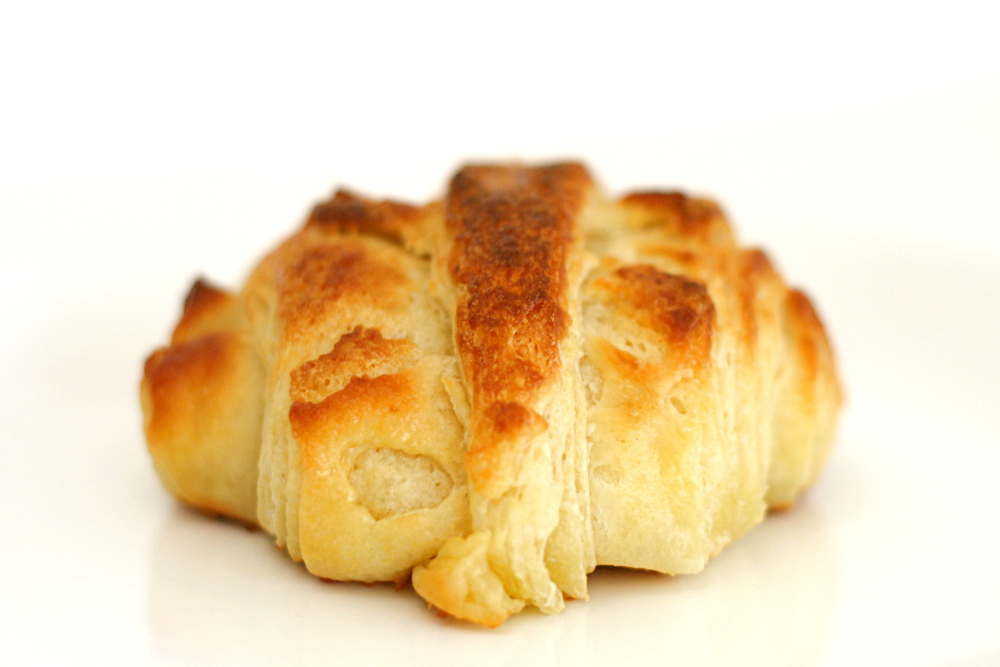
Someone must have told me “if at first you don’t succeed, try, try again” at a particularly impressionable age. Either that, or I’ve struggled through learning enough new subjects that I recognize the value of practice. Or maybe I’m just obsessive.
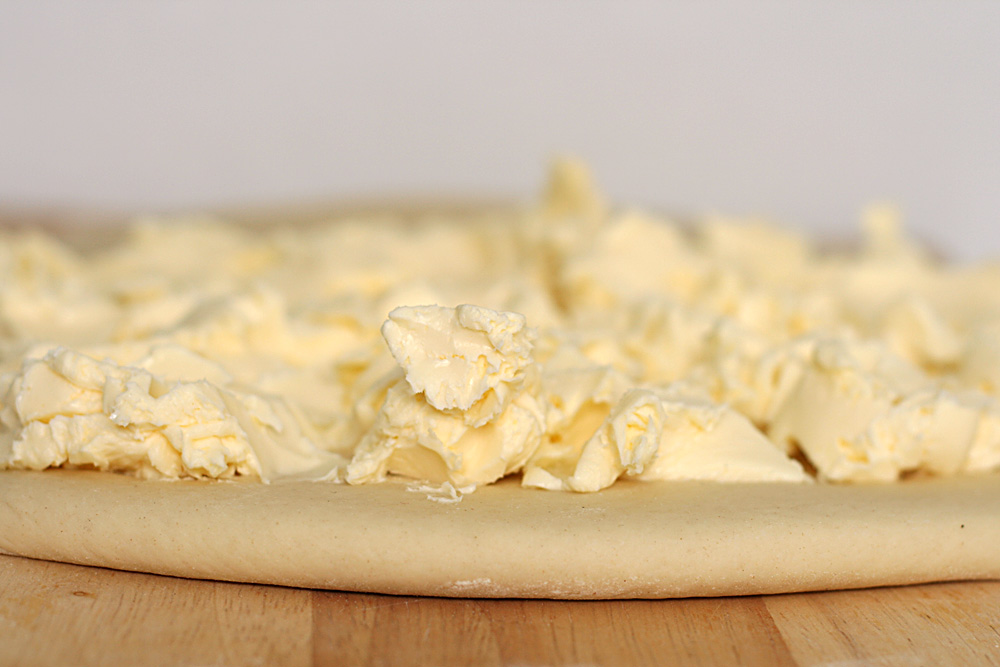
copy-of-img_4717

This was my first time making croissants, and it wasn’t perfect, which immediately sparked my desire to try a bunch of other croissant recipes. (Not side-by-side, mind you. My head spins just thinking about it.) The thing is that I can’t figure out exactly where I went wrong. I’m hoping that by gaining experience with different recipes, I’ll become more familiar with the process and pick up some nice tips along the way.
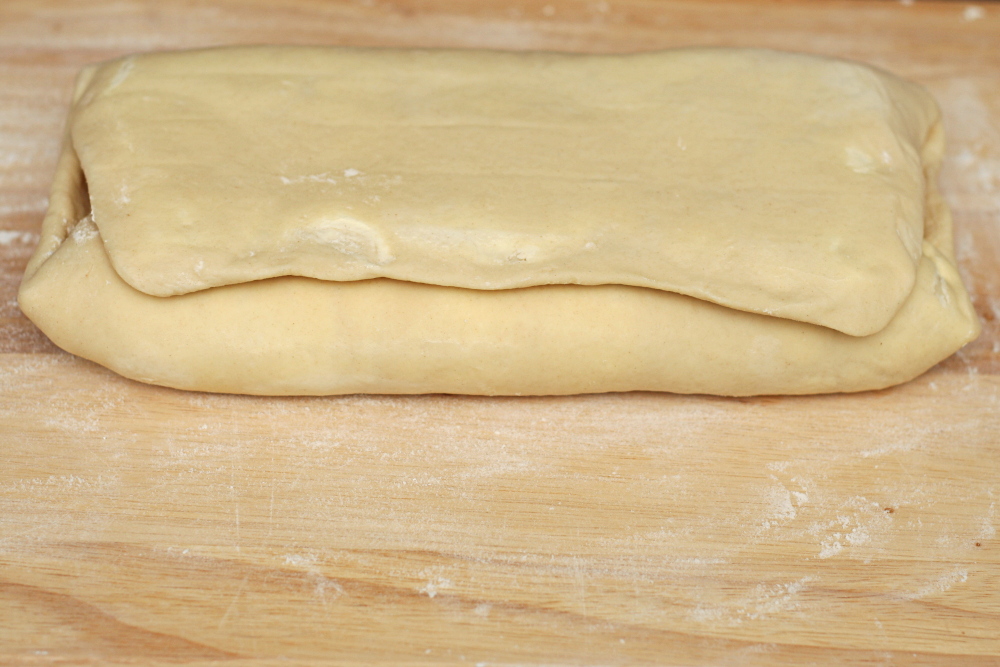
copy-of-img_4746

Of the recipes I’ve considered trying, this one is the most complex. First, a pre-ferment is made, two days before you want to bake the croissants. That gets turned into croissant dough the next day, and from there, most recipes are the same. Knead a little, then roll it out with a bunch of butter and fold it like a letter. Chill, then repeat the folding twice. Chill overnight. Roll out, cut, shape, rise, bake.
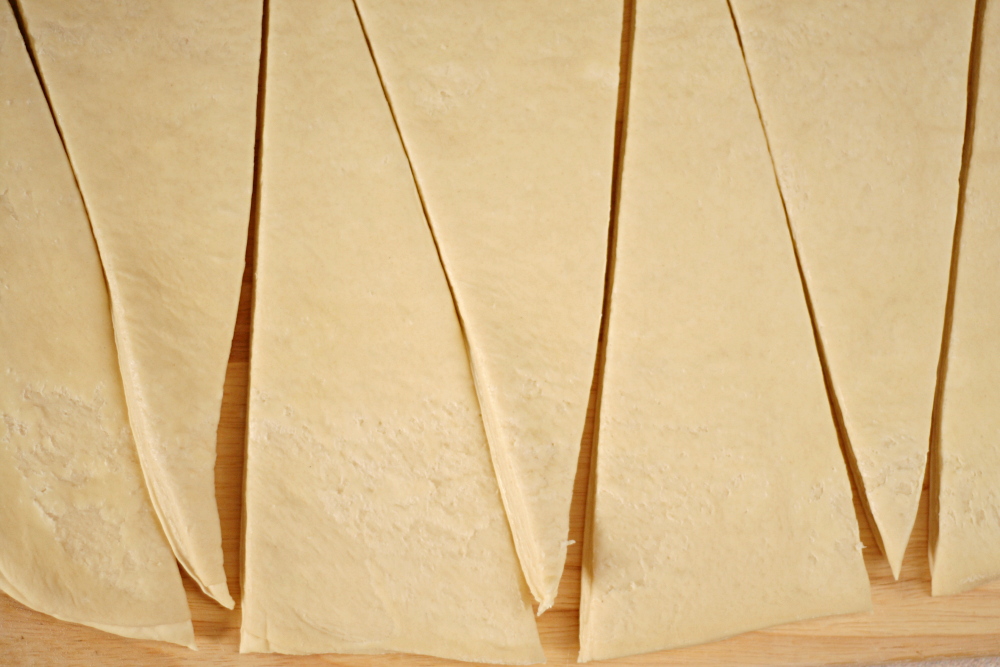
copy-of-img_4752

The author of the recipe, Elisabeth Prueitt, gives a lot of detail, turning my 60-word summary of the recipe into 5 pages of instructions, tips, and advice. She does not mention that the dough will be so elastic that it will fight you every time you have to roll it out, which makes me think I did something wrong. (Overkneading is my guess.) She also does not say anything about a huge pool of butter left behind in the baking pan after the croissants are removed from the oven. And I’m guessing the yeasty flavor of the croissants isn’t right either. And clearly they’re not supposed to look like this:
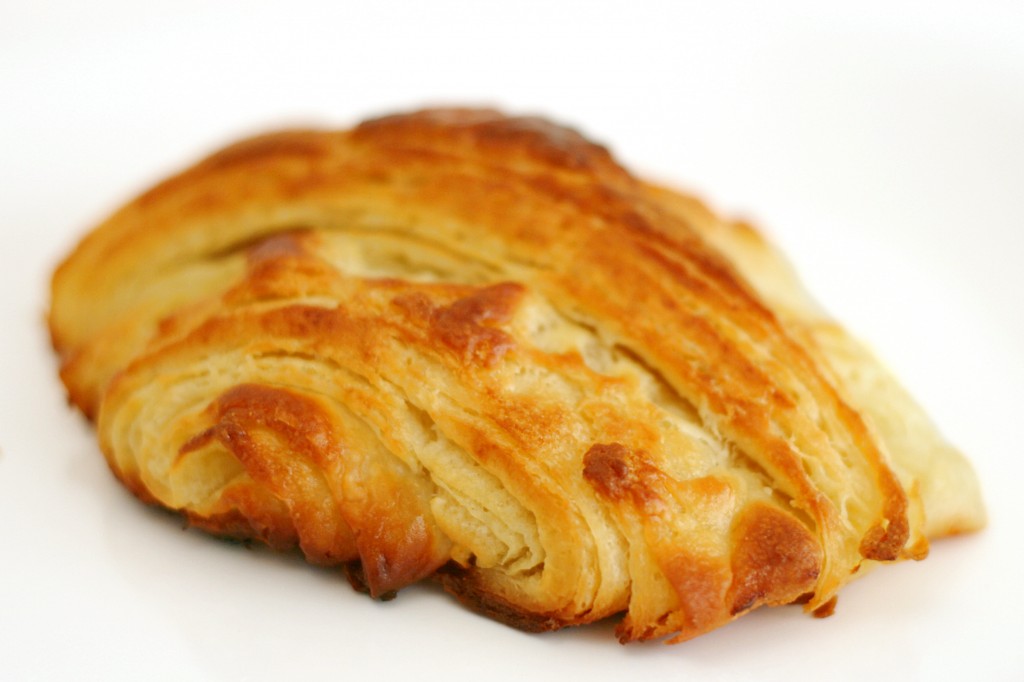
copy-of-img_4772

The croissants were still way better than edible - flaky, light, buttery delicious - but clearly my technique needs some refining. After I made this recipe, I was chomping at the bit to try another, and in fact, I have a handful of recipes I want to try. (Although one of them was the recipe that the Daring Bakers made a few years ago - which I just realized is this one. So never mind that one.) Expect to see reviews of one croissant recipe after another as I attempt to master this pastry.
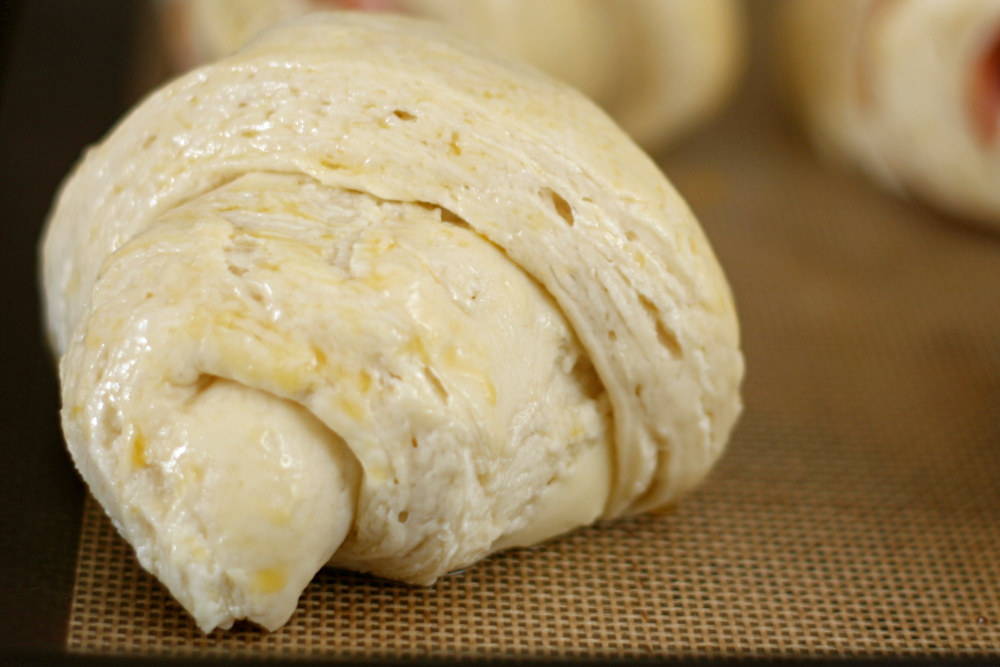
copy-of-img_4764


Preferment:
¾ cup non-fat milk (6 ounces/150 ml)

1 tablespoon active dry yeast (15ml)
1⅓ cup all-purpose flour (6¼ ounces/175g)

Dough:
1 tablespoon + 1 teaspoon active dry yeast (20ml)
1¾ cup whole milk (14 ounces/425 ml)
6 cups all-purpose flour (28 ounces/800g)
⅓ cup sugar (2½ ounces/70g)
1 tablespoon + 1 teaspoon salt (20 ml)
1 tablespoons unsalted butter (15ml)

Roll-in butter:
2¾ cup unsalted butter (22 ounces/625 g)

Egg wash:
4 large egg yolks (2 ounces/60 ml)
¼ cup heavy cream
pinch salt

To Make the Preferment:

In a small saucepan, warm the milk to take the chill off (between 80° to 90 °F). Pour the milk into a mixing bowl, sprinkle the yeast over the milk, stir to dissolve the yeast with a wooden spoon, and then add the flour, mixing with a wooden spoon until a smooth batter forms. Cover the bowl with cheesecloth and let the mixture rise until almost double in volume, 2 to 3 hours at moderate temperature or overnight in the refrigerator.

To Make the Dough:

First measure out all your ingredients and keep them near at hand. Transfer the preferment and then the yeast to the large bowl of a stand mixer fitted with the dough hook. Mix on low speed until the yeast is incorporated into the preferment batter, which will take a minute or two. Stop the mixer as needed and use a spatula to clean the bottom and sides of the bowl, folding the loosened portion into the mixture to incorporate all the elements fully. When the mixture has come together into an even, well-mixed mass, increase the speed to medium, and mix for a couple of minutes. Slowly add half of the milk and continue to mix until the milk is fully incorporated.

Reduce the speed to low, add the flour, sugar, salt, melted butter, and the rest of the milk, and mix until the mass comes together in a loose dough, about 3 minutes. Turn off the mixer and let the dough rest for 15 to 20 minutes. This resting period helps to shorten the final mixing phase, which comes next.

Engage the mixer again on low speed and mix until the dough is smooth and elastic, a maximum of 4 minutes. If the dough is very firm, add a little milk, 1 tablespoon at a time. Take care not to overmix the dough, which will result in a tough croissant that also turns stale more quickly. Remember, too, you will be rolling out the dough several times, which will further develop the gluten structure, so though you want a smooth dough, the less mixing you do to achieve that goal, the better. Cover the bowl with cheesecloth and let the dough rise in a cool place until the volume increases by half, about 1½ hours.

Lightly flour a work surface. Transfer the dough to the floured surface and press into a rectangle 2 inches thick. Wrap the rectangle in plastic wrap, or slip it into a plastic bag and seal closed. Place the dough in the refrigerator to chill for 4 to 6 hours.

To Make the Roll-in butter:

About 1 hour before you are ready to start laminating the dough, put the butter that you will be rolling into the dough in the bowl of the mixer fitted with the paddle attachment. Mix on medium speed until malleable but not warm or soft, about 3 minutes. Remove the butter from the bowl, wrap in plastic wrap, and place in the refrigerator to chill but not resolidify.

Laminating the dough:

Lightly dust a cool work surface, and then remove the chilled dough and the butter from the refrigerator. Unwrap the dough and place it on the floured surface. Roll out the dough into a rectangle 28 by 12 inches. With the long side of the rectangle facing you, and starting from the left side, spread and spot the butter over two-thirds of the length of the rectangle. Fold the uncovered third over the butter and then fold the left-hand third over the center, as if folding a business letter. The resulting rectangle is known as a plaque. With your fingers, push down along the seams on the top and the bottom to seal in the plaque.

Second turn:

Give the plaque a quarter turn so the seams are to your right and left, rather than at the top and bottom. Again, roll out the dough into a rectangle 28 by 12 inches, and fold again in the same manner. Wrap in plastic wrap or slip into a plastic bag and place in the refrigerator for 1½ to 2 hours to relax the gluten in the dough before you make the third fold, or “turn”.

Third turn:

Clean the work surface, dust again with flour, and remove the dough from the refrigerator. Unwrap, place on the floured surface, and again roll out into a rectangle 28 by 12 inches. Fold into thirds in the same manner. You should have a plaque of dough measuring about 9 by 12 inches, about the size of a quarter sheet pan, and 1½ to 2 inches thick. Wrap in plastic wrap or slip into the plastic bag, place on a quarter sheet pan, and immediately place in the freezer to chill for at least 1 hour. If you intend to make the croissants the next morning, leave the dough in the freezer until the evening and then transfer it to the refrigerator before retiring. The next morning, the dough will be ready to roll out and form into croissants, proof, and bake. Or, you can leave the dough in the freezer for up to 1 week; just remember to transfer it to the refrigerator to thaw overnight before using.

Making the croissant:

When you are ready to roll out the dough, dust the work surface again. Roll out the dough into a rectangle 32 by 12 inches and 3/8 inches thick. Using a pizza wheel or chef’s knife, cut the dough into long triangles that measure 10 to 12 inches on each side and about 4 inches along the base.

Line a half sheet pan (about 13 by 18 inches) with parchment paper. To shape each croissant, position a triangle with the base facing you. Positioning your palms on the two outer points of the base, carefully rolling the base toward the point. To finish, grab the point with one hand, stretching it slightly, and continue to roll, tucking the point underneath the rolled dough so that the croissant will stand tall when you place it on the sheet pan. If you have properly shaped the croissant, it will have 6 or 7 ridges.
As you form the croissants, place them, well-spaced, on the prepared half-sheet pan. When all the croissants are on the pan, set the pan in a draft-free area with relatively high humidity, and let the pastries rise for 2 to 3 hours. The ideal temperature is 75 °F. A bit cooler or warmer is all right, as long as the temperature is not warm enough to melt the layers of butter in the dough, which would yield greasy pastries. Cooler is preferable and will increase the rising time and with it the flavor development. For example, the home oven (turned off) with a pan of steaming water placed in the bottom is a good place for proofing leavened baked items. To make sure that no skin forms on the pastries during this final rising, refresh the pan of water halfway through the rising.

During this final rising, the croissants should at least double in size and look noticeably puffy. If when you press a croissant lightly with a fingertip, the indentation fills in slowly, the croissants are almost ready to bake. At this point, the croissants should still be slightly “firm” and holding their shape and neither spongy nor starting to slouch. If you have put the croissants into the oven to proof, remove them now and set the oven to 425 °F to preheat for 20 to 30 minutes.

About 10 minutes before you are ready to bake the croissants, make the egg wash. In a small bowl, whisk together the egg yolks, cream, and salt until you have a pale yellow mixture. Using a pastry brush, lightly and carefully brush the yolk mixture on the pastries, being careful not to allow the egg wash to drip onto the pan. Let the wash dry slightly, about 10 minutes, before baking.

Place the croissants into the oven, immediately turn down the oven temperature to 400 °F, and leave the door shut for the first 10 minutes. Then working quickly, open the oven door, rotate the pan 180 degrees, and close the door. This rotation will help the pastries to bake evenly. Bake for 6 to 10 minutes longer, rotating the pan again during this time if the croissants do not appear to be baking evenly. The croissants should be done in 15 to 20 minutes total. They are ready when they are a deep golden brown on the top and bottom, crisp on the outside and light when they are picked up, indicating that the interior is cooked through.

Remove the croissants from the oven and place them on a wire rack to cool. As they cool, their moist interiors will set up. They are best if eaten while they are still slightly warm. If they have just cooled to room temperature, they are fine as well, or you can rewarm them in a 375°F oven for 6 to 8 minutes to recrisp them before serving. You can also store leftover croissants in an airtight container at room temperature for 1 day, and then afterward in the refrigerator for up to 3 days. If you have stored them, recrisp them in the oven before serving.
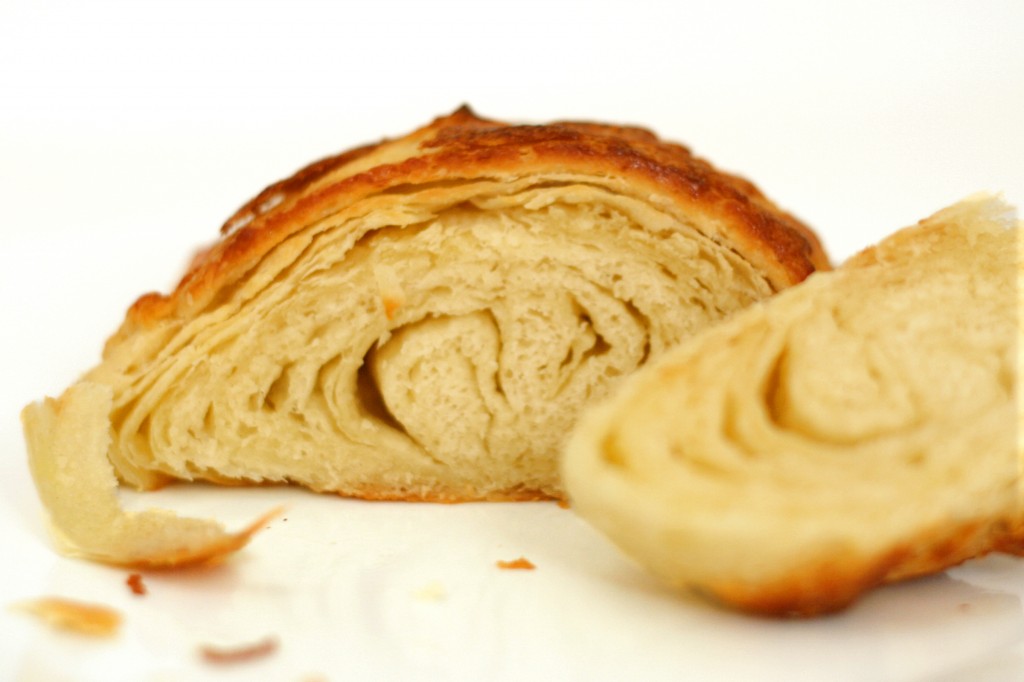
copy-of-img_4779

Additional sites (Tartine recipe search)

The Way the Cookie Crumbles: Croissants recipe, blog.
Veronica's Test Kitchen: Croissant post.
La Tartine Gourmande: Morning Sugar Rolls recipe, blog.

Saturday, June 6, 2009

I call it a hobbie; to cook, to bake, to please the palate, to eat.

I see so many yummy treats, fast meals, clever party ideas and inspiring creations online. An assortment of posts and websites are just waiting to be brought together. So, this blog is designed, to capture those creations that have caught my eye. So, here's to building a collection of recipes and party ideas that are just my style and that of my husband's and family. Bon Apetit!